

![[subpage-banner/2_pamatkyaexpozice_1.png]](https://c.jewishmuseum.cz/images/subpage-banner/2_pamatkyaexpozice_1.png)
The Old Jewish Cemetery In Prague: Where Stones Tell Stories
The Old Jewish Cemetery is one of Europe’s oldest surviving Jewish burial grounds. In use between 1439 and 1787, it contains more than 12,000 tombstones. Because of the ghetto’s limited space and Jewish burial customs, which prohibit the disturbance of graves, burials were stacked on top of previous ones – according to some researchers, up to ten layers deep.
Stones that tell stories
A place where history reads itself to the present:
-
15th–16th century: Dark sandstone slabs with deeply carved Hebrew inscriptions.
-
17th–18th century: White and reddish-brown marble, relief lettering, ornate decoration. After 1600, monumental tombs (ohels) with lengthy epitaphs praising the wisdom, charity and community service of prominent individuals.
Symbols as a key to the stories
Each symbol carries a specific meaning:
- Crown – wisdom
- Grapes, pomegranate – abundance
- Hands raised in blessing – Kohanim
- Pitcher or jug – Levites Occupations are indicated by tools, such as scissors, lancets, a book, or a violin. The graves of young girls are marked by delicate figures. The images of mythical creatures, such as the winged lion or the griffin, serve a protective function.
“Talking” animals
Animal motifs often allude to the name of the deceased:
-
lion (Loew),
-
deer (Hirsch),
-
wolf (Wolf),
-
bear (Baer),
-
fish (Fischel/Karpeles),
-
fox (Fuchs), rooster (Hahn),
-
goose (Gans),
-
small bird (Feigele).
Many inscriptions conclude with the five letters T.N.C.H.V., meaning “May his soul be bound in the bond of life.”
The resting place of distinguished individuals
The cemetery forms a map of individual destinies:
-
David Gans (d. 1613) – scholar at the court of Rudolf II, and a friend of Tycho de Brahe and Johannes Kepler.
-
Mordecai Katz (d. 1592) – printer whose press supplied Europe with Hebrew books.
-
David Oppenheim (d. 1736) – Chief Rabbi whose library is a treasured feature of Oxford’s Bodleian Library. The most visited grave is the Renaissance tomb of Rabbi Loew (d. 1609), enveloped in legends of the Golem. His tomb remains a pilgrimage site where visitors place slips of paper with personal requests.
Noteworthy facts
-
Nothing may be removed from the cemetery – even a dog lies buried here, having once been thrown over the wall.
-
In Hebrew, a cemetery is often called beit chayim (house of life) – as death is seen as a beginning, not an end.
Visitor information
-
Part of the sightseeing circuit: Prague Jewish Town
- Wheelchair access: partial (entrance from U Hřbitova Street)
Visit the Old Jewish Cemetery in Prague
- a unique memorial where history, symbols and stories are interconnected.
Buy tickets online.
Video & 3D tour
Where to find us
entry Široká 3, 110 00 Praha 1
Frequently asked questions
What makes this cemetery unique?
It contains layered graves and tombstones dating back to 1439.
How many gravestones are here?
Around 12,000 preserved stones.
How long does the visit take?
Usually 30 minutes.

Starý židovský hřbitov / OLD JEWISH CEMETERY
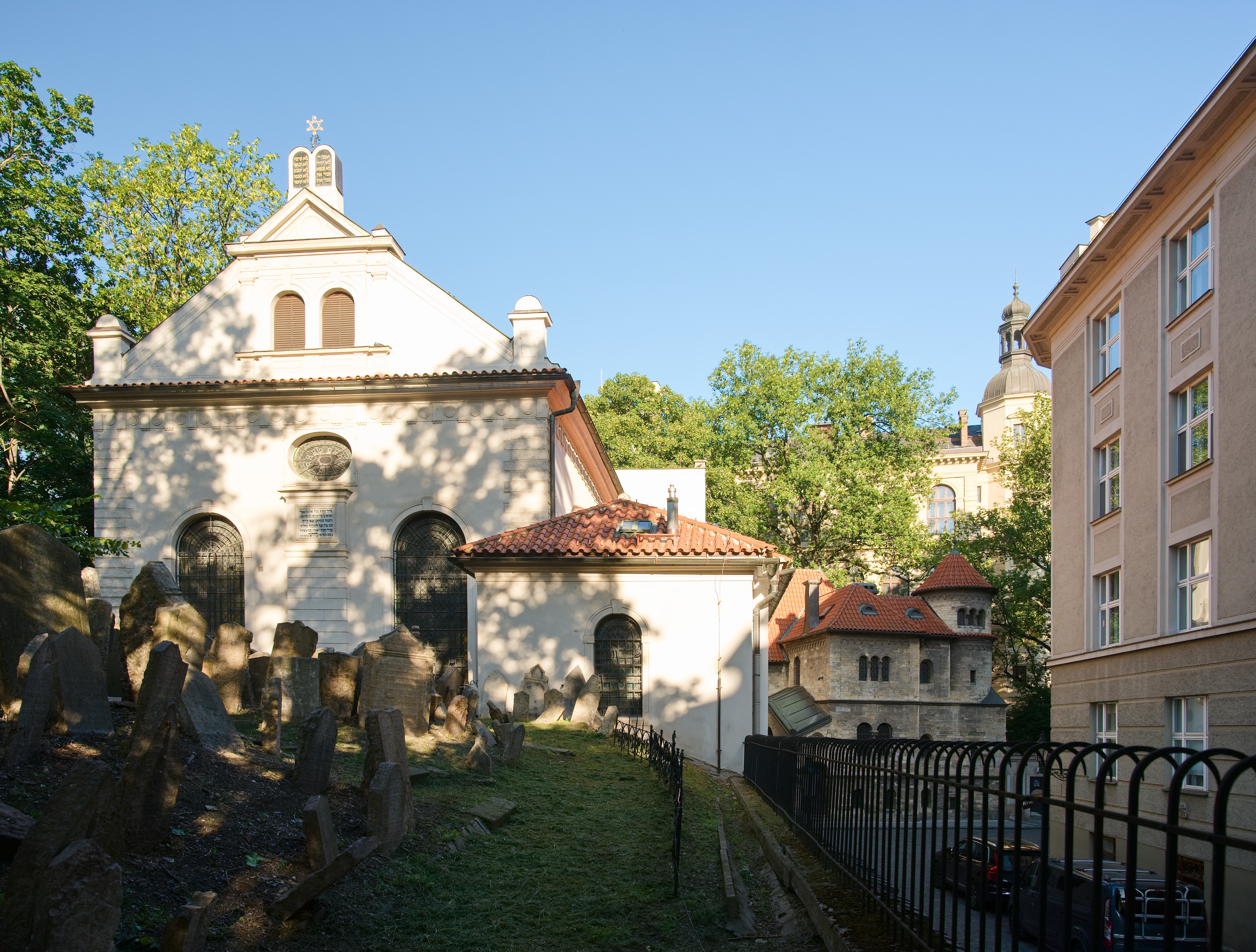
Starý židovský hřbitov / OLD JEWISH CEMETERY
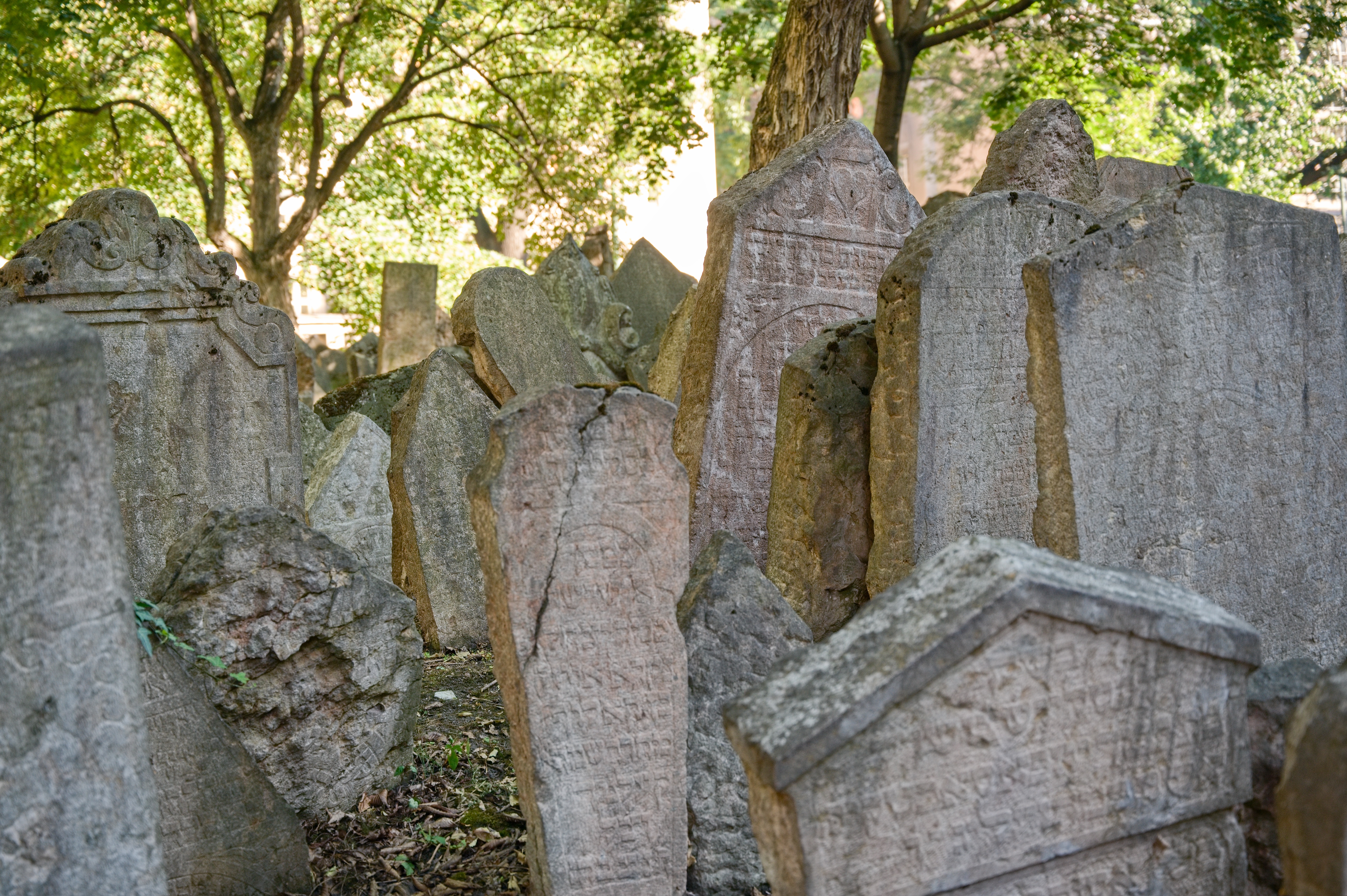
Starý židovský hřbitov / OLD JEWISH CEMETERY
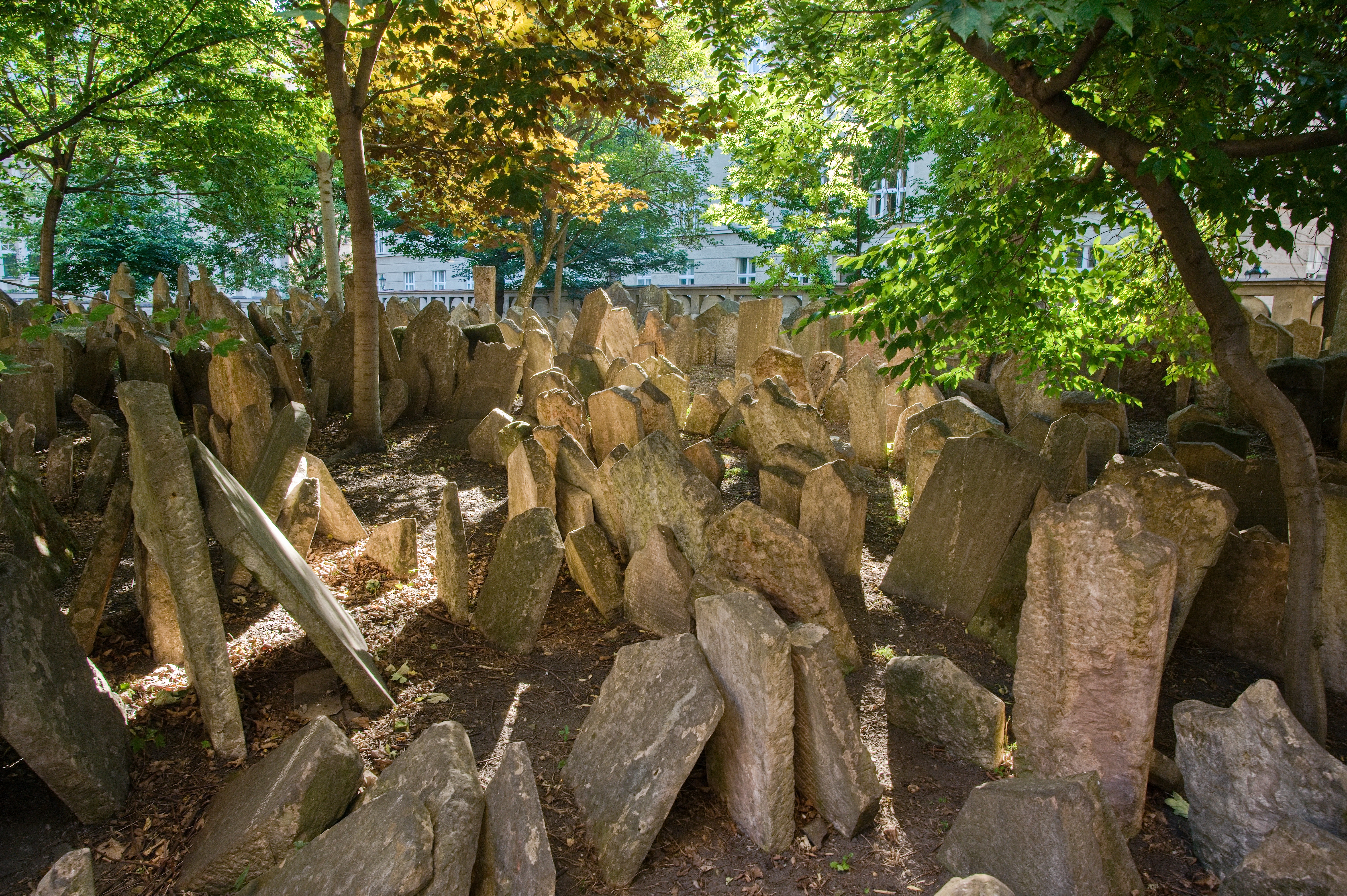
Starý židovský hřbitov / OLD JEWISH CEMETERY
![[design/2013/breadcrumb-arrow.png]](https://c.jewishmuseum.cz/images/design/2013/breadcrumb-arrow.png)
![[design/2013/fb-icon.jpg]](https://c.jewishmuseum.cz/images/design/2013/fb-icon.jpg)
![[design/2013/youtube-icon.png]](https://c.jewishmuseum.cz/images/design/2013/youtube-icon.png)
![[design/2013/Twitter.png]](https://c.jewishmuseum.cz/images/design/2013/Twitter.png)
![[design/2013/Instagram.png]](https://c.jewishmuseum.cz/images/design/2013/Instagram.png)

![[Incident2.png]](https://c.jewishmuseum.cz/images/Incident2.png)
![[homepage-banner/ENGbannerKohlovadiscount2018.jpg]](https://c.jewishmuseum.cz/images/homepage-banner/ENGbannerKohlovadiscount2018.jpg)