

![[subpage-banner/6_Media.png]](https://c.jewishmuseum.cz/images/subpage-banner/6_Media.png)
Welcome to the Jewish Museum in Prague!
The Jewish Museum in Prague is the third oldest of its kind in the world – not a single building, but a remarkable ensemble of
historic synagogues, monuments, and exhibitions located in the former Jewish Quarter, Josefov, in Prague’s Old Town.
With one ticket, visitors gain access to the most iconic sites of Jewish history and culture:
-> Old-New Synagogue – the oldest active synagogue in Europe
-> Old Jewish Cemetery – one of the most evocative historic burial sites in the world
-> Spanish Synagogue – a stunning example of Moorish Revival architecture
-> Pinkas Synagogue – the second oldest preserved synagogue in Prague, housing a profoundly moving memorial to the Shoah
-> Maisel Synagogue – built by the mayor of the Jewish Town and one of the wealthiest inhabitants of Rudolfine Prague,
Mordechai Maisel
-> Klausen Synagogue – the largest surviving synagogue of the former Prague Ghetto, constructed in the early Baroque
style
Whether you’re a history enthusiast, architecture lover, or curious traveler, this immersive experience offers a profound connection to centuries of Jewish life, resilience, and tradition.
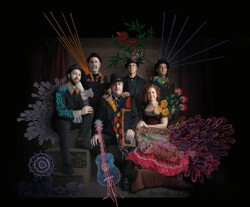
The Klezmatics Special
An exceptional musical gift celebrating the 120th anniversary of the Jewish Museum in Prague!
On November 14, the extraordinary Spanish Synagogue hosts a special performance by the legendary Klezmatics—the New York-based
band that has been bringing klezmer to world stages for over four decades, seamlessly blending its traditional roots with
the energy of rock, folk, and other musical genres. Come and enjoy with us an unforgettable evening, full of energy and colorful
music!
This event is held as part of the 120th anniversary celebrations of the Jewish Museum in Prague.
14. 11. 2026 19:00 - 20:30
Spanish synagogue, Vězeňská 1, Prague 1
Please note: Due to enhanced security measures, we strongly advise arriving well in advance and bringing only essential
personal items.
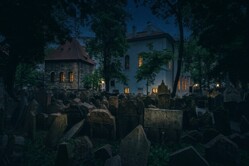
Experience the Jewish Museum After Dark
When the gates close and the last visitors have left, a different side of the Jewish Museum in Prague reveals itself. Quiet, intimate and atmospheric – an experience that belongs to the evening, away from the daylight and bustle of the city.
We invite you to discover the Jewish Museum in Prague after regular opening hours, in complete privacy. No crowds, no rush. Just you, your private guide, and exclusive access to some of Prague’s most remarkable historic sites.
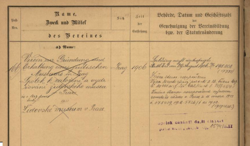
29 August 1906: The Birth of the Jewish Museum in Prague
August 1906: The Czech lands form part of the Austro-Hungarian Empire, and Prague—still somewhat provincial at the time—seeks to rival the great capitals of Europe. An ambitious redevelopment plan envisages a fundamental transformation of the medieval city into the “Paris of the East”. Josefov, the former Jewish Town, stands in the way.
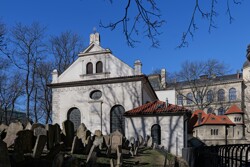
One Ticket, Three Days of History
With a single entrance ticket, you can explore the most important sites of the Jewish Museum in Prague — Maisel Synagogue,
Pinkas Synagogue, Old-New Synagogue, Spanish Synagogue, and the world-famous Old Jewish Cemetery.
All sites are located in the heart of Josefov, just a few minutes’ walk from each other, allowing you to enjoy the area
at your own pace.
Your ticket is valid for three consecutive days, so there’s no need to rush. Take your time to explore the exhibitions,
reflect in the peaceful cemetery, and return later to see what you might have missed.
Visiting the Jewish Quarter is more than a museum experience — it’s a walk through centuries of memory and resilience.
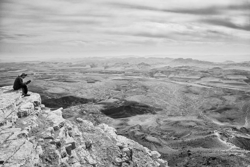
Burning Love: A remarkable exhibition in Klausen Synagogue
2026, April 23 – From April 17 to September 6, 2026, photography and history enthusiasts are invited to visit Burning Love,
a remarkable exhibition of photographs by Karel Cudlín, on view at the Klaus Synagogue. The exhibition accompanies the release
of the eponymous book, which brings together the photographer’s visual reflections on Israel spanning three decades, from
1996 to 2026.
Through Cudlín’s distinctive documentary lens, the exhibition offers a rare journey across Israel – from the Golan Heights
to the Sinai Peninsula – while revisiting key turning points in the history of this ethnically and culturally diverse Middle
Eastern country. More information about the exhibition can be found HERE.
On May 12 at 7:00 p.m., the exhibition programme will be enriched by a public discussion with Karel Cudlín and journalist,
writer, and winemaker Tsur Shezaf, who contributed his texts to the accompanying publication. Further details are available
via this link.
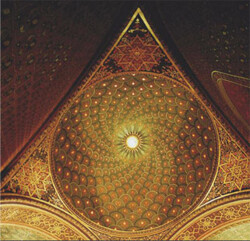
Top Things to See at the Jewish Museum in Prague
The Jewish Museum in Prague is not a single building, but a collection of historic sites across the Jewish Quarter. Visitors can enter the Old-New Synagogue, walk among the gravestones of the Old Jewish Cemetery, read the names of Holocaust victims in the Pinkas Synagogue, and admire the richly decorated Spanish Synagogue. Together with exhibitions in the Maisel and Klausen Synagogues and the Ceremonial Hall, these places reveal both famous highlights and lesser-known aspects of Jewish life in Prague.
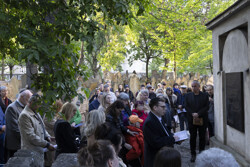
Memorial of war time employees opened in the Old Jewish Cemetery
2026, May 26 - The Jewish Museum in Prague is celebrating its 120th anniversary this year. The fact that today it is able to administer one of the world’s most extensive collections of Judaica, an important library, and the heritage of Jewish communities throughout Bohemia and Moravia is due to the efforts of people who until recently remained largely unknown — the staff of the wartime Central Jewish Museum. A recently unveiled memorial at the Old Jewish Cemetery is dedicated precisely to them. Nearby, a new relaxation area has also been created, providing a welcome extension to the visitor route through the Old Jewish Cemetery.
The Golem of Prague: The Legend of Rabbi Loew’s Creation
Of all the stories woven into Prague’s past, none has travelled as far as the legend of the Golem — a being shaped from clay and brought to life by sacred words. Said to have been created by Rabbi Judah Loew ben Bezalel, the Maharal of Prague, the Golem has become a symbol of faith, protection, and the limits of human power.
The tale belongs to Prague’s Jewish Quarter, where history and myth have long shared the same narrow streets.
.jpg)
![[design/2013/breadcrumb-arrow.png]](https://c.jewishmuseum.cz/images/design/2013/breadcrumb-arrow.png)
![[design/2013/fb-icon.jpg]](https://c.jewishmuseum.cz/images/design/2013/fb-icon.jpg)
![[design/2013/youtube-icon.png]](https://c.jewishmuseum.cz/images/design/2013/youtube-icon.png)
![[design/2013/Twitter.png]](https://c.jewishmuseum.cz/images/design/2013/Twitter.png)
![[design/2013/Instagram.png]](https://c.jewishmuseum.cz/images/design/2013/Instagram.png)

![[Incident2.png]](https://c.jewishmuseum.cz/images/Incident2.png)
![[homepage-banner/ENGbannerKohlovadiscount2018.jpg]](https://c.jewishmuseum.cz/images/homepage-banner/ENGbannerKohlovadiscount2018.jpg)