.png)
- Památky a expozice
- Program a vzdělávání
- Sbírky a výzkum
- Sbírky a fondy
- Textil
- Kovy a 3D předměty
- Vizuální umění
- Rukopisy a nálezy z geniz na papíře
- Vzácné tisky
- Archiv
- Dokumentace šoa
- Sbírka Rozhovory s pamětníky
- Fotoarchiv
- Péče o sbírky
- Restaurátorské dílny
- Výpůjčky předmětů ze sbírkového fondu Židovského muzea v Praze
- Dary a akvizice
- Kabinet Friedl
- Osvědčení k vývozu předmětu kulturní hodnoty
- Provenienční výzkum a bezúplatné převody ze sbírek ŽMP
- Digitální sbírky
- Věda a výzkum
- Sbírky a fondy
- Zapojte se
- Média

Holocaust Remembrance Day: Remembering the Names, the Lives, and the Silence
Holocaust Remembrance Day: Remembering the Names, the Lives, and the Silence
Holocaust Remembrance Day is not marked by celebration or spectacle. It is a day of pause — a moment set aside to remember
six million Jewish men, women, and children whose lives were destroyed, and to reflect on what remains when voices are silenced
and entire worlds erased.
In Prague, remembrance carries particular weight. The city’s synagogues, cemetery, and memorial spaces bear witness to
centuries of Jewish life — and to the devastating rupture caused by the Holocaust. To remember here is not abstract; it
is rooted in names, places, and absence.
What Is Holocaust Remembrance Day?
Teh International Holocaust Remembrance Day commemorates the victims of the Shoah and honours the survivors who carried memory
forward. It also remembers other groups persecuted and murdered by the Nazi regime. The day is observed internationally through
moments of silence, readings of names, educational programmes, and cultural events dedicated to remembrance rather than commemoration.
At its core lies a simple but demanding task: to remember individual lives, not only historical numbers.
Prague and the Loss of a Community
Before the Second World War, Jewish life in Bohemia and Moravia was rich and diverse. Prague was home to synagogues, schools,
cultural associations, scholars, artists, and families whose presence shaped the city for generations.
The Holocaust destroyed this world. Nearly 80,000 Jews from the Czech lands were murdered, many deported through the Terezín
ghetto before being sent to extermination camps. Entire families vanished. Streets lost their voices. Homes became silent.
The absence is still visible today — not only in memorials, but in the spaces between them.
Names as Memory
One of the most powerful forms of remembrance is the act of naming. In the Pinkas Synagogue, the names of Holocaust victims
from Bohemia and Moravia are written on the walls, arranged by community and family. There are no images, no dramatization
— only names, dates, and repetition.
This is remembrance as presence. Each name restores individuality where the Holocaust sought to erase it.
Remembrance Through Music
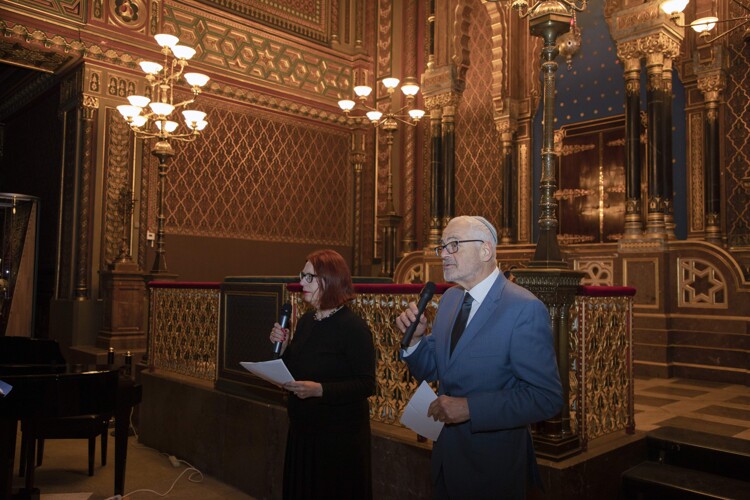
On the occasion of the International Holocaust Remembrance Day in 2026, the Jewish Museum in Prague, in cooperation with
the Jewish Community of Prague and with the financial support of the Foundation for Holocaust Victims, will mark the day with
a gala concert held in the Spanish Synagogue.
Music, long a part of Jewish spiritual and cultural expression, offers another form of remembrance — one that speaks through
sound rather than words. Tickets for the concert will be available for purchase on site, allowing visitors and residents alike
to take part in this shared moment of reflection.
Why Remembrance Still Matters
As the generation of survivors grows smaller, remembrance becomes an act of moral responsibility rather than personal memory.
Holocaust Remembrance Day reminds us that persecution does not begin with violence, but with indifference, exclusion, and
the gradual erosion of human dignity.
Remembering the Holocaust is not only about the past. It is a commitment to vigilance in the present.
Frequently Asked Questions
What is remembered on the International sHolocaust Remembrance Day?
The six million Jews murdered during the Holocaust, as well as other victims of Nazi persecution.
Why are names central to remembrance?
Because the Holocaust aimed to erase individuality. Naming restores identity and dignity.
How is Holocaust Remembrance Day observed in Prague?
Through memorial ceremonies, educational programmes, exhibitions, and cultural events at historic sites.
Are there special events at the Jewish Museum in Prague?
Yes. In 2026, the Jewish Museum in Prague will commemorate the day with a gala concert in the Spanish Synagogue.
Can the public attend commemorative events?
Yes. Events such as the concert are open to the public, and tickets can be purchased on site.
Sources
Author:
This article was prepared by the team at the Jewish Museum in Prague, which has been preserving Jewish heritage since 1906.
The museum holds one of the most extensive collections of Judaica in the world outside of Israel. Through exhibitions, publications,
and educational programs, our mission is to promote understanding of Jewish history, culture, and traditions — both in the
Czech Republic and globally.
![[Incident2.png]](https://c.jewishmuseum.cz/images/Incident2.png)

![[homepage-banner/CZbannerKohlovadiscount2018.jpg]](https://c.jewishmuseum.cz/images/homepage-banner/CZbannerKohlovadiscount2018.jpg)