.png)

![[subpage-banner/6_Media.png]](https://c.jewishmuseum.cz/images/subpage-banner/6_Media.png)
Josefov: A complete Guide to Prague´s Jewish Quarter
12. 1. 2026 Přehled novinek
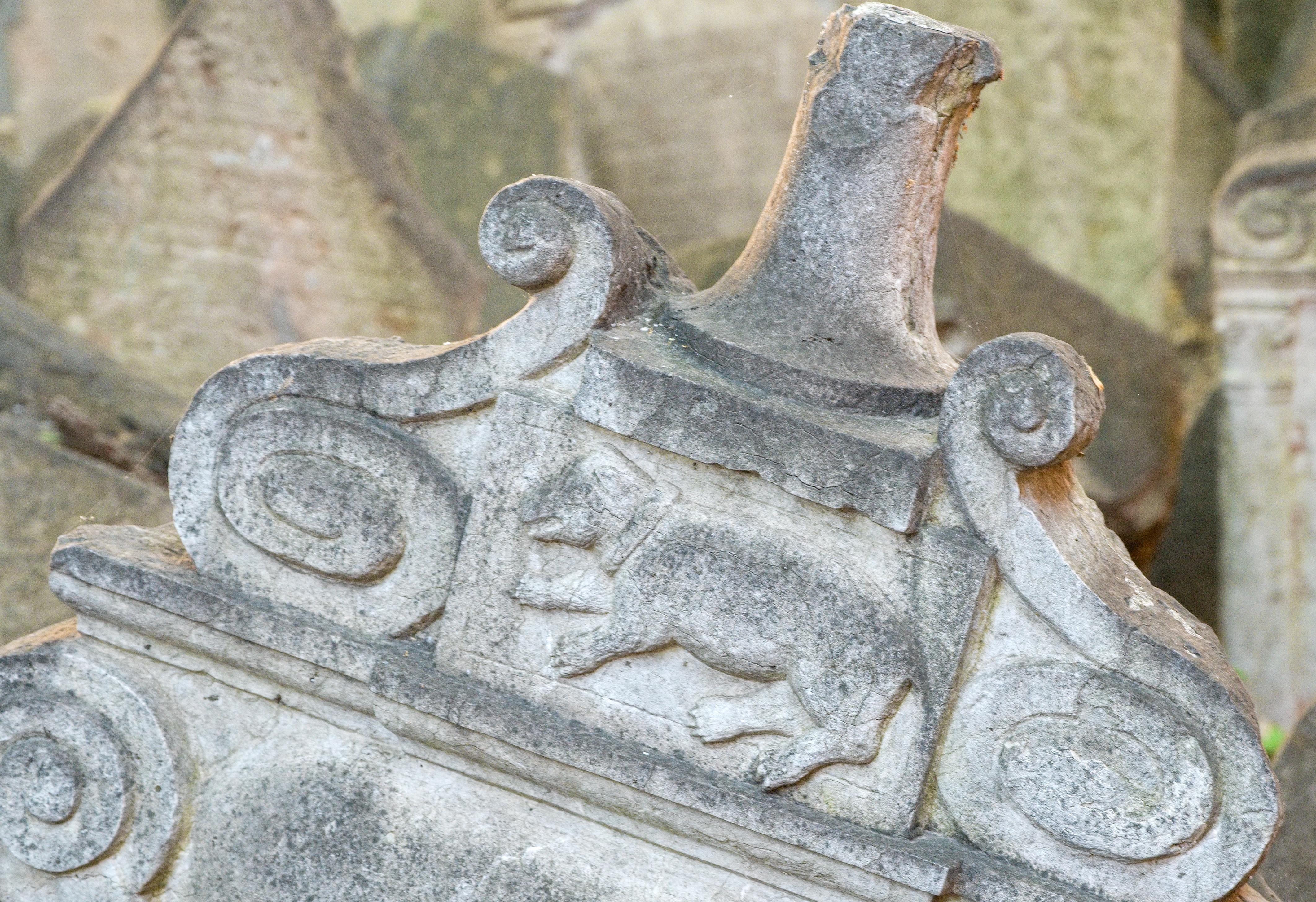
Old Jewish Cemetery_detail
Josefov: A Complete Guide to Prague’s Historic Jewish Quarter
In the heart of Prague’s Old Town lies Josefov, the city’s historic Jewish Quarter — a place where nearly a thousand years of memory and faith converge. Within its narrow streets and centuries-old synagogues, visitors can trace the story of one of Europe’s oldest Jewish communities: a story of learning and devotion, tragedy and renewal.
Origins and Early History of Josefov
Jewish merchants first settled in Prague around the 10th century. By the Middle Ages, the community had grown into a self-contained “Jewish Town” (Židovské Město), complete with its own synagogues, schools, courts, and gates. Life here alternated between flourishing scholarship and periods of persecution.
In the late 18th century, Emperor Joseph II issued reforms that improved civil rights for Jews throughout the Habsburg Empire. When the ghetto was officially integrated into the city, it took his name — Josefov, “Joseph’s Town.”
Monuments of Faith and Culture
Most of the surviving landmarks now form part of the Jewish Museum in Prague, founded in 1906 to preserve Bohemian and Moravian Jewish heritage.
Old-New Synagogue
Completed around 1270, it is the oldest functioning synagogue in Europe. Its austere Gothic arches have witnessed seven centuries of prayer. According to legend, the Golem created by Rabbi Loew still rests in its attic. Read more.
Pinkas Synagogue
Established in the 15th century, it now serves as a poignant memorial to 80,000 Czech and Moravian Jews murdered in the Holocaust. Every name is hand-painted on its walls, turning silence into remembrance. Read more.
Maisel Synagogue
Built by the philanthropist Mordecai Maisel in the 1590s, this Renaissance treasure houses exhibitions tracing Jewish life from medieval times to the Enlightenment. Read more.
Klausen Synagogue
Erected in the 17th century beside the ritual bath (mikveh), it presents displays on Jewish traditions, festivals, and daily customs. Read more.
Once belonging to the Burial Society (Chevra Kadisha), this Neo-Romanesque building introduces visitors to Jewish concepts of death, respect, and eternal life. Read more.
Old Jewish Cemetery
Used from the 15th to the 18th century, it holds thousands of layered graves and a forest of weathered stones. Among them lies Rabbi Judah Loew ben Bezalel, the Maharal of Prague — scholar, philosopher, and keeper of legend. Read more.
Life Within the Walls
Before the modern era, Josefov was a dense network of lanes where faith and scholarship flourished side by side. Teachers, mystics, and printers made Prague a beacon of Jewish learning. Despite restrictions, the community fostered rich cultural and spiritual life, publishing texts that spread far beyond Bohemia.
From Demolition to Preservation
At the end of the 19th century, an urban renewal plan known as “asanace” swept away much of the old ghetto. Only a handful of sacred sites survived — those that now form the core of the museum complex.
The establishment of the Jewish Museum in Prague ensured that Josefov’s voice would not be lost. Its collections today include more than 40,000 artefacts and 100,000 books, ranking among the largest Judaica holdings outside Israel.
Visiting Josefov Today
A single ticket from the Jewish Museum allows access to the synagogues, the Old Jewish Cemetery, and the Ceremonial Hall. Guided tours provide historical context and stories of everyday life once lived here. The Old-New Synagogue remains an active house of prayer and is closed on Jewish holidays.
Visitors are encouraged to move quietly and respectfully: Josefov is both a UNESCO-listed monument and a sacred space.
Meaning and Memory
Josefov is not frozen in time; it is a dialogue between past and present. The worn gravestones and inscribed walls speak of loss, yet also of endurance. Each synagogue, each name, reminds us that remembrance is an act of life.
Conclusion
To walk through Josefov is to encounter centuries compressed into a few streets — faith carved in stone, history written in silence. The Jewish Museum in Prague preserves this heritage not as relics of sorrow but as living witnesses to the strength of spirit that shaped the city itself. Josefov endures as a place of reflection, dignity, and understanding.
Frequently Asked Questions
What is Josefov?
Prague’s historic Jewish Quarter, preserving synagogues, cemeteries, and museums that document Jewish life from the Middle
Ages to today.
Why is it called Josefov?
It was renamed after Emperor Joseph II, whose reforms in the 1780s improved the legal status of Jews in the Habsburg Empire.
How old is the Old-New Synagogue?
Dating to around 1270, it is the oldest continually active synagogue in Europe.
Who was Rabbi Loew?
Rabbi Judah Loew ben Bezalel, the Maharal of Prague, was a 16th-century scholar and mystic best known for the legend of the
Golem.
What can visitors see inside the Pinkas Synagogue?
The walls bear the handwritten names of nearly 80,000 victims of the Holocaust from Bohemia and Moravia.
Is the Old Jewish Cemetery still used?
No; it closed in 1787 but remains one of Europe’s most important Jewish burial grounds.
How long does a visit take?
Allow about two to three hours to explore the sites included in the Jewish Museum ticket.
Sources:
https://english.radio.cz/landmark-prague-stories-8685642/7
![[design/2013/breadcrumb-arrow.png]](https://c.jewishmuseum.cz/images/design/2013/breadcrumb-arrow.png)
![[Incident2.png]](https://c.jewishmuseum.cz/images/Incident2.png)

![[homepage-banner/CZbannerKohlovadiscount2018.jpg]](https://c.jewishmuseum.cz/images/homepage-banner/CZbannerKohlovadiscount2018.jpg)